
US President Donald Trump has cautioned Israeli Prime Minister Benjamin Netanyahu that Israel risks international isolation if it resumes extensive military operations against Iran, following a volatile 24-hour period of escalating cross-border hostilities.

US President Donald Trump and Israeli Prime Minister Benjamin Netanyahu had a tense phone call over the future course of the war on Iran, with Washington favouring a deal instead of resuming strikes, according to US media reports.

The latest development comes as diplomatic efforts between Washington and Tehran continue despite renewed hostilities. CNN reported that US and Iranian officials are still working towards a nuclear agreement by mid-August, even as preparations for possible military action have continued in parallel.

Israeli Prime Minister Benjamin Netanyahu announced a significant policy shift, declaring that Israel's robust economy no longer requires American financial assistance. He also reiterated strong opposition to Palestinian statehood, affirmed an aggressive national defence strategy, warned of pre-emptive strikes against Iran, and confirmed the continued military presence in southern Lebanon.

'As result, Netanyahu 'convinced' Trump to go to war with the help of overoptimistic Israeli intelligence assessments, essentially explaining to him that they only need to bomb Iran for 3-4 days, and the regime would then collapse.' 'Rather unsurprisingly, Netanyahu is ever since blaming his own intel service for the entire operation failing.'

Tensions in West Asia have dramatically escalated as Israel launched targeted military operations against Iran, triggering widespread blasts across strategic cities, following earlier Iranian projectile attacks on Israel.

Amid ongoing ceasefire negotiations, Israel is on high alert, fearing a potential surprise missile and drone attack from Iran targeting Gulf countries and Israel, according to intelligence officials.
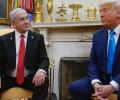
A media report suggests the US and Israel considered installing Mahmoud Ahmadinejad as Iran's president as part of regime change plans.

Israeli Prime Minister Benjamin Netanyahu has threatened to continue targeting Iranian leaders, claiming recent successes in eliminating key figures. He asserted that Israel, with US support, aims to undermine the Iranian regime and empower the Iranian people.

Israel's Defence Minister Israel Katz declared that the Israeli military will not withdraw from its security zones in Lebanon, Syria, and Gaza, directly opposing the newly announced American-led diplomatic framework with Tehran. National Security Minister Itamar Ben-Gvir further asserted Israel's sovereignty, stating, "Trump's agreement does not bind us. Israel is not subject to the United States, and we are an independent and sovereign nation!"

The Congress party has criticised Prime Minister Narendra Modi's diplomatic efforts following the ceasefire agreement between the US and Iran, facilitated in part by Pakistan. The party claims this development undermines Modi's strategy and exposes his perceived failures in foreign policy.

There are enough people at the top decision-making level in Tehran who are still willing to negotiate, provided Trump can create the right setting for the negotiation to acquire a dynamic of its own, points out Ambassador M K Bhadrakumar.
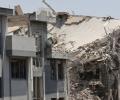
An inconclusive end to this war will pose high risk for Netanyahu of a cascading demand for a regime change in Israel, predicts Ambassador M K Bhadrakumar.

The pause gives the US time to breathe, to regroup, to move its expeditionary force into position without risk of interception along the way. It gives Iran nothing -- on the ground, attacks against its infrastructure continue apace. Prem Panicker in his must read daily blog on the Gulf War.

Sonia Gandhi criticised PM Modi's Israel visit, calling it a "bewildering strategic decision" amid the regional conflict.

In a statement issued following the announcement of the US-mediated deal, Qassem characterised the agreement as a 'humiliating' and 'shameful' surrender of Lebanese sovereignty that prioritises Israeli and American dictates over the nation's independence.

Saudi Arabia and the UAE are actively pushing Trump to take the war to its bitter finish and 'erase' Iran's presence in the geopolitics of the region. Simply put, the two most powerful Sunni Arab oligarchies are on the same page as Israel. Such interference increases the risk of a breakdown in dialogue between the US and Iran, points out Ambassador M K Bhadrakumar.

By all available indications, the White House drafted a face-saving note and handed it, ready-made, to Islamabad. Pakistani Prime Minister Shehbaz Sharif was supposed to then post it in the guise of a plea urging Trump to extend the deadline by two weeks 'to allow diplomacy to run its course'. Trump would then graciously accept Pakistan's 'request' and declare a ceasefire. Sharif dutifully posted the message on X. Except that he, or whoever was handling the account, forgot to delete the tell-tale first line visible in the edit history: 'Draft - Pakistan's PM Message on X'. Prem Panicker's must read blog on the Iran War.

'Much will depend on the position of the United States.' 'It will have to be seen to what extent the US will be more interested in achieving some form of a deal and to what extent Israel will be allowed to continue to carry out both airstrikes and the killing of Iranian officials.'

To be sure, Trump is furious, as the trajectory of the war is in a state of Zugzwang, as chess players call it. Trump and Netanyahu stare at two choices -- retreat in humiliation and concede Tehran's demands -- recognition of its rights, reparations, and binding security guarantees -- or perish in a quagmire, points out Ambassador M K Bhadrakumar.
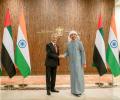
Frankly, was it really necessary in the middle of a fratricidal war for External Affairs Minister S Jaishankar to travel to Abu Dhabi for a one-on-one with the sheikh on April 12?Or, for National Security Advisor Ajit Doval to follow up on April 26? Or, for PM Narendra Modi to follow through today? There are no easy answers, notes Ambassador M K Bhadrakumar.

'The entire US ecosystem built over decades at the bases in the Gulf region, especially the UAE, costing trillions of dollars have been decimated, dealing a mortal blow to the US Central Command's war capability,' points out Ambassador M K Bhadrakumar.

'Iran cannot trust the USA because it considers the USA to be Israel-controlled. And no, the IRGC is not going to accept anything else but major US concessions.'

'Our diplomacy should have been focused on preventing war and avoiding the inevitable disruptions it would cause, posing a real risk to India's growth story,' asserts former foreign secretary Shyam Saran.

The threat of wars hovers over the negotiations in Oman, but the good part is that Trump called the talks to be 'very good' and Iran's President Masoud Pezeshkian responded that they 'constitute a step forward', points out Ambassador M K Bhadrakumar.

It may now be time to question the price India is paying for Israel's disregard of the serious undermining of India's energy security, asserts former foreign secretary Shyam Saran.

The United States, which entered this war in expectation of a short, sharp win along the Venezuela model, is now preparing for deeper involvement in a conflict it does not fully control, without the allies it typically relies on, against an adversary that is not behaving as expected, in a global environment that is already absorbing economic shock. Prem Panicker continues his must read daily blog on the Gulf War.

Trump may strike. He may announce productive talks and extend again. He may do both at the same time. Iran will not open the Strait on someone else's terms, so no matter what happens, that problem will remain unsolved. And the IRGC will still be collecting its $2 million toll from every ship bold enough to ask permission to pass.

By appearing to privilege ideological affinity over strategic balance, India risks eroding the trust painstakingly built across West Asia. Once the perception takes hold that India's friendship is conditional and transactional, rebuilding credibility will be difficult, warns Amberish K Diwanji.

Alliances fight wars effectively only when they share an endgame. If Israel acted without US knowledge, then the military alliance is operating without real coordination at the level of strategic targeting. Neither picture is reassuring in a war that is no longer regional in its consequences. Prem Panicker continues his must read daily blog on the Gulf War.

The intriguing bit is that Trump is likely to attend the talks in Islamabad this weekend -- if he does, it will be the clearest signal yet that the US is ready to exit the war with some sort of win to show, since he cannot afford to go for the talks and return empty-handed, notes Prem Panicker in his must read blog on the Iran War

'Was the five-day pause ever meant to hold, or was it simply another instrument of signaling, of positioning, of buying time in a war where even the pauses are tactical?' asks Prem Panicker in his must read daily blog on the Gulf War.

The LPG squeeze on India's restaurant sector is the quotidian face of a deeper crisis.
'Netanyahu lured Trump into a trap by enticing him with a seductive scenario of massive lucrative business in Gaza's reconstruction.' 'Trump's imagination is running riot, completely disconnected from ground realities,' asserts Ambassador M K Bhadrakumar.

When everyone has footage and no one can verify it, the loudest voice wins, notes Prem Panicker who begins a daily blog on the War in the Middle East.

Fight on toward goals that keep receding, or exit with most objectives unmet. Trump is agitated, his poll numbers falling below the Plimsoll line, his base fractured between those who back the war and those who remember that he campaigned on ending them.
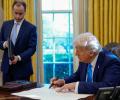
The stage may be set for a recalibrated US-Iran relationship, suggests Ambassador M K Bhadrakumar.

Trump couldn't care less anymore about the Israeli demand for Iran's 'de-nuclearisation' and 'de-militarisation.' Trump pins hopes on a grand bargain with Iran as a partner in America First, argues Ambassador M K Bhadrakumar.

'Assassinating the leaders of an organisation, destroying their homes, buildings and institutions are not 'wiping out' an organisation.' 'Genociding the Lebanese or the Palestinians is something that Israel cannot technically do, let alone morally afford.'

A day after killing of Hezbollah chief Hassan Nasrallah in an airstrike in Beirut, Israel conducted widespread strikes in Lebanon on Sunday, killing over 100 people. The Israeli Air Force (IAF) also launched airstrikes on military targets in Yemen, specifically targeting Houthi-controlled sites, including power plants and a seaport.
